A finished product used to mean something fairly simple: the piece was printed, packaged, or assembled. From there, only a few final operations stood between production and the next destination.
Today, those final steps carry much more responsibility.
Depending on the application, a product may need to be separated from a stack, registered on a conveyor, secured with a tab, printed with unique information, labeled, inspected, and verified before it can move forward. Another version of that same product may require a different label with different data or an entirely different sequence of operations.
Across print finishing, packaging, and end-of-line applications, these processes are increasingly responsible for bringing a product’s physical form and identifying information together correctly.
That changes the role of automation. As production becomes more variable, success depends less on how quickly one machine performs its task and more on how reliably the entire process maintains control from one operation to the next.
That changes the role of finishing line automation. As production becomes more variable, success depends on how reliably the entire process maintains control from one operation to the next.
Why Product Identification Is Becoming More Complex
The individual tasks involved in identifying and preparing products have been around for a long time but the number of combinations manufacturers need to manage is consistently growing.
Shorter runs mean more equipment adjustments and growing SKU counts introduce more versions of similar products. Customers require their own labels, shipping information, and packaging configurations. Variable data can change between products, batches, and destinations.
Meanwhile, turnaround expectations are tighter than ever.
For operators, that creates a different kind of production challenge. A system running thousands of identical pieces can settle into a predictable rhythm. A system running dozens of different product dimensions, tab placements, label formats, and inspection criteria is much more challenging to manage.
The problem isn’t just product variety, it’s variability. Your production line needs to handle every combination of operations and it needs to know which combinations belong to which products.
That requires a cohesive, communicative, and consistent automation system.
Product Handling Comes Before Product Identification
For a product to be printed, labeled, and inspected accurately, the system needs control over the product itself, which starts upstream.
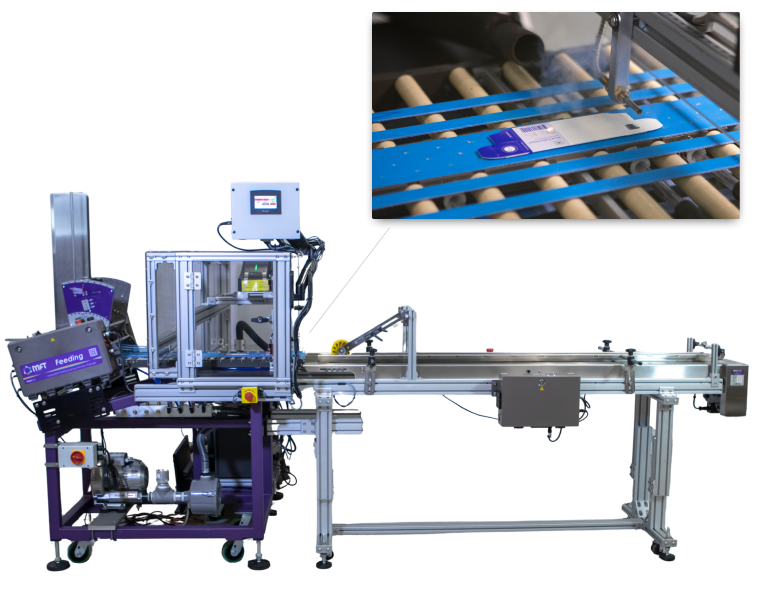
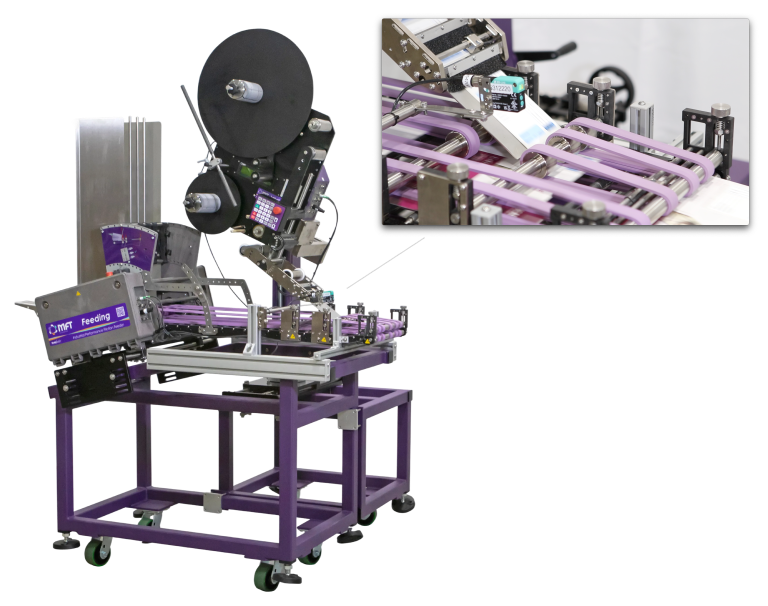
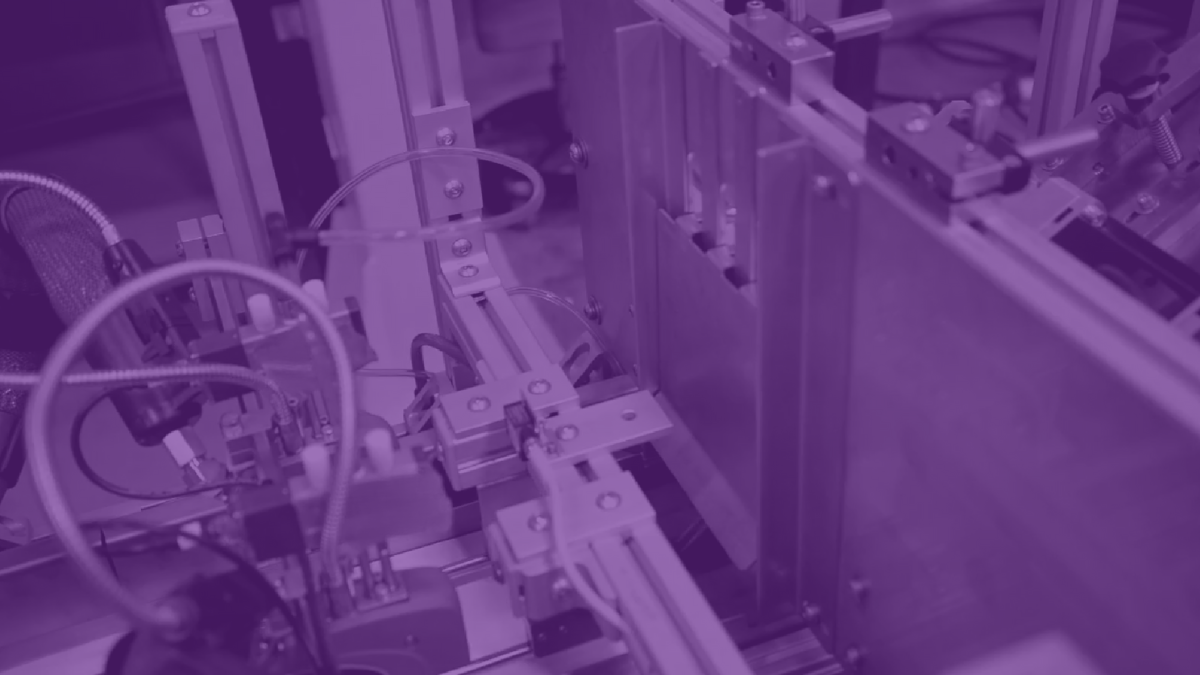
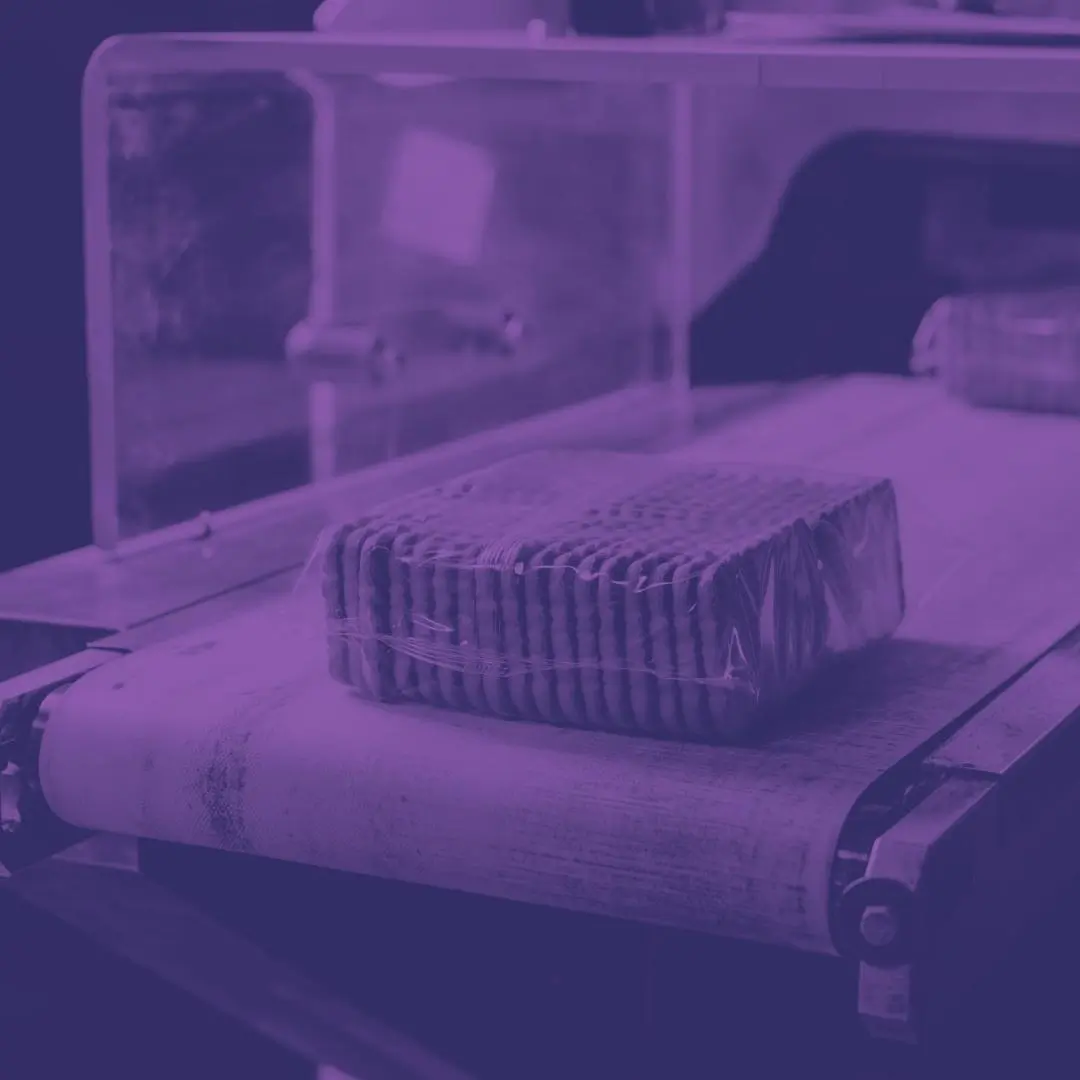
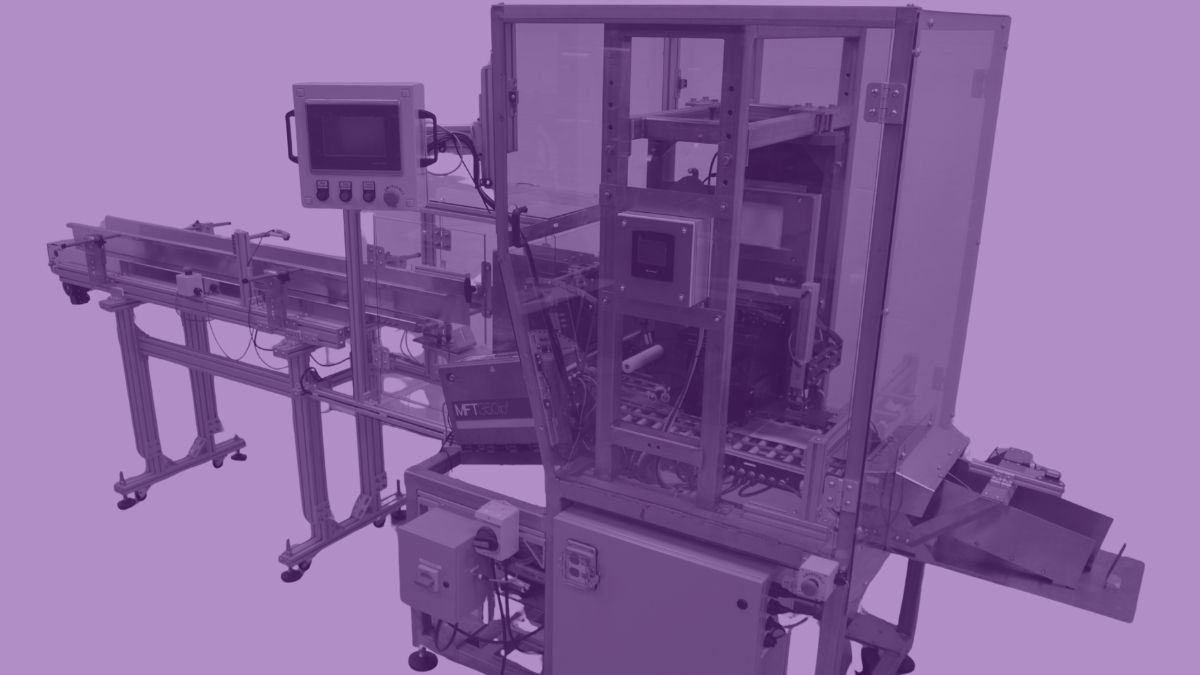
A feeder must separate products correctly, while a conveyor must establish reliable movement and spacing. Registration needs to keep each piece in a predictable position as it approaches the next operation.
Small inconsistencies along the line will become larger problems downstream.
If products reach a label applicator at inconsistent intervals, the labeling system has to compensate. If they shift position before reaching a vision system, inspection becomes more difficult. If two products enter the system together, every operation that follows is affected.
The consistency of product handling is critically linked to accuracy of product identification.
In a well-designed automated workflow, feeders, conveyors, sensors, controls, and downstream equipment establish a controlled process together. Each operation receives the product in the condition it needs to perform correctly.
Where Tabbing Machines Fit in Print and Mailing Workflows
Tabbing is one of those operations that looks simple until you consider what happens before and after it.
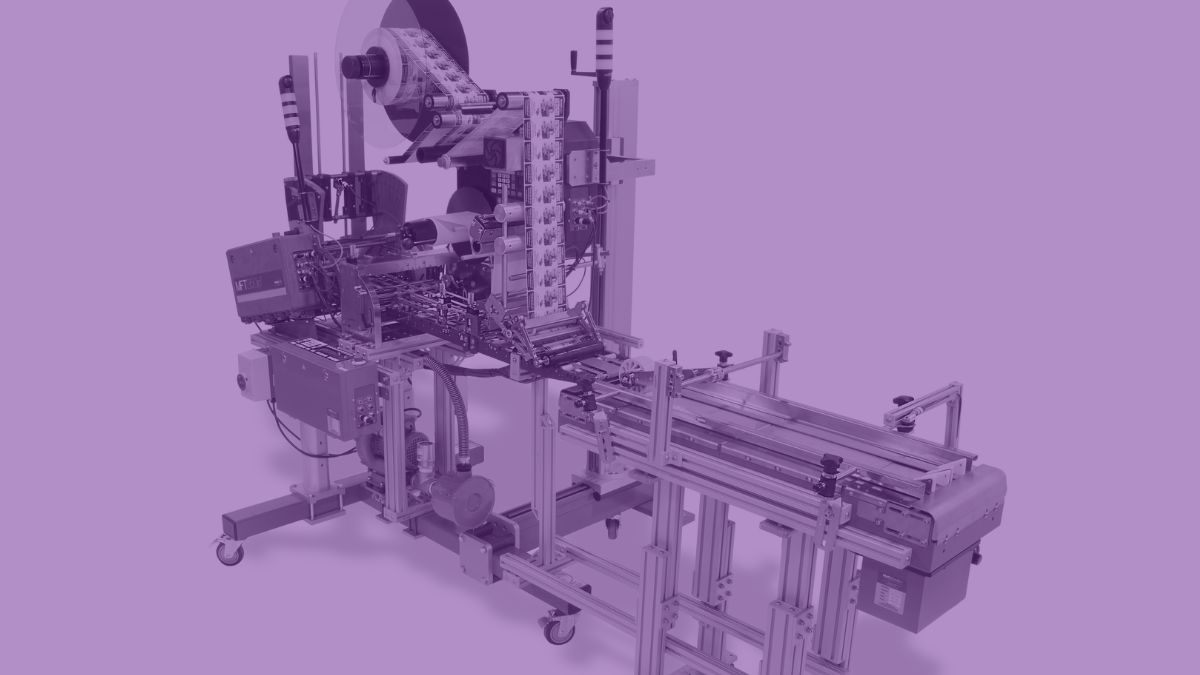
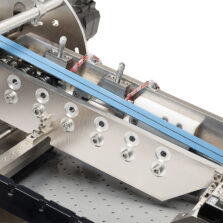
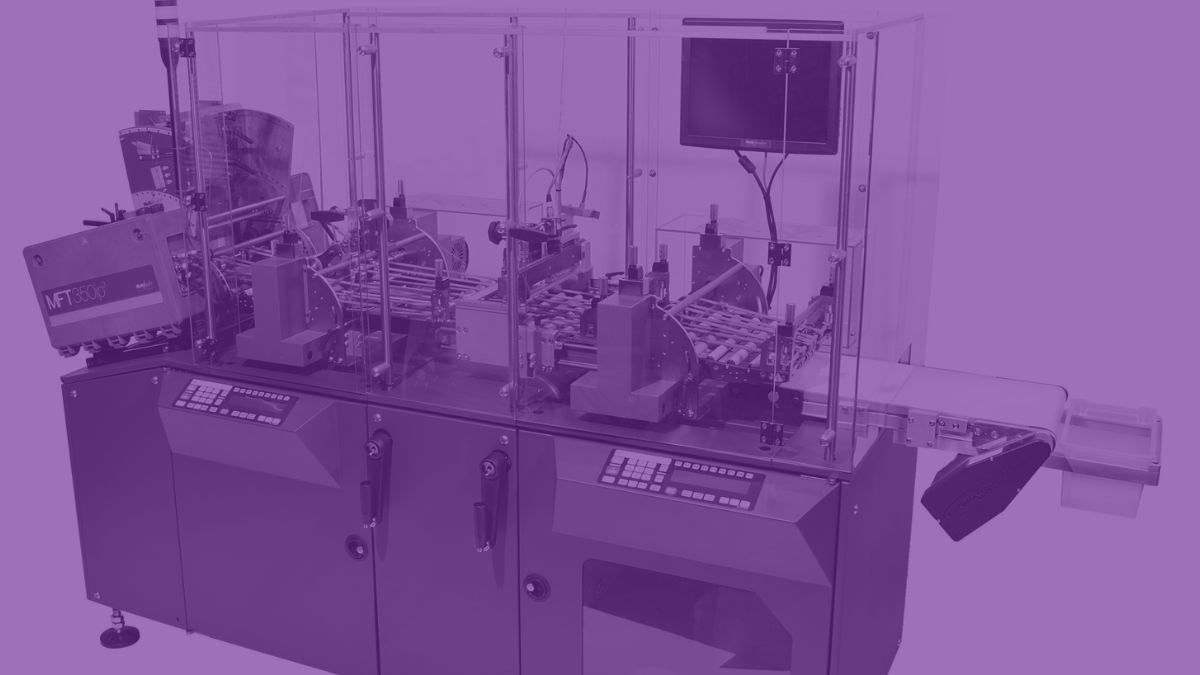
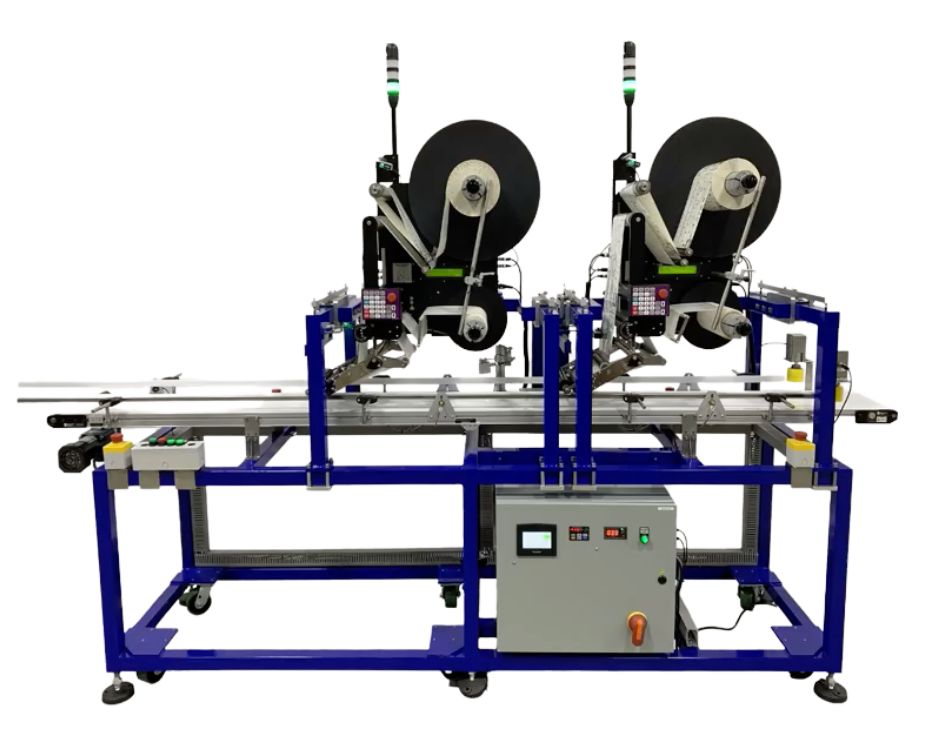
A tabbing system applies an adhesive tab or wafer seal to keep a folded or bound piece closed. The technology is used for:
- mailers
- booklets
- pharmaceutical information materials
- promotional pieces
- printed products that need to remain sealed and secure during handling
The tab itself is only a small piece of the process. Orientation, timing, and placement factors must all be aligned to avoid disrupting the rest of the workflow.
Then there’s the variability.
Different booklet dimensions, thicknesses, folds, and tabbing requirements all pass through the same operation. Rated speed matters, but complexity compounds and complicates the productivity story.
A flexible automation system can incorporate a tabbing machine to support those transitions without turning every new format into an extended setup process.
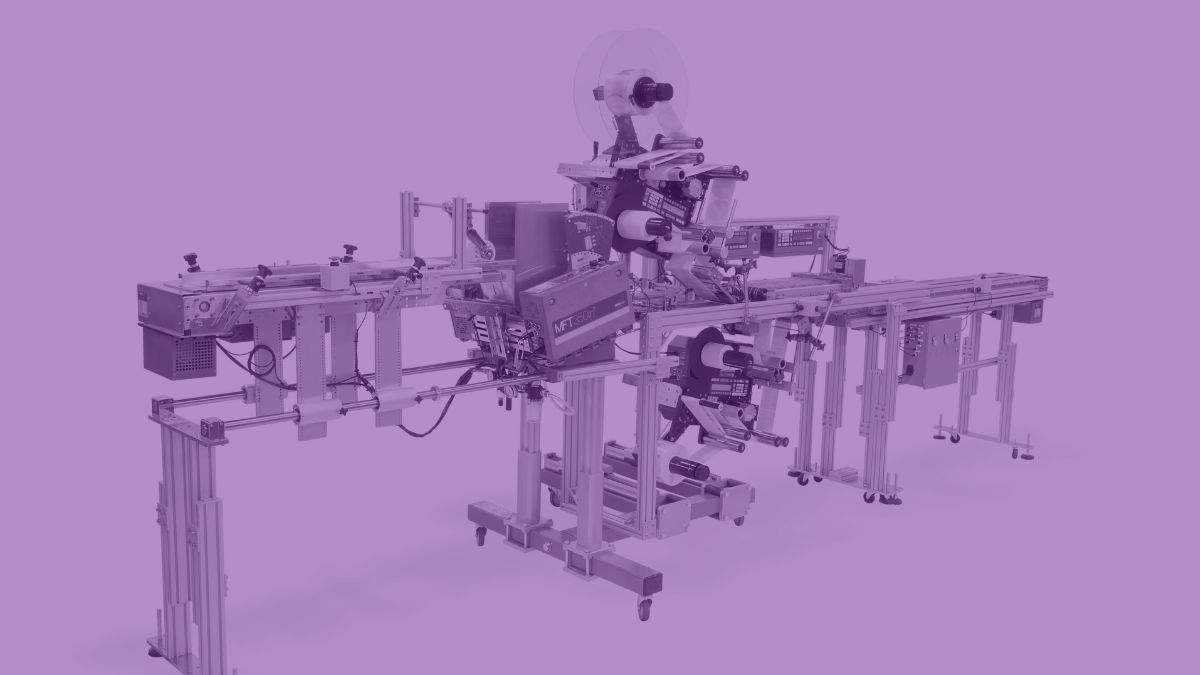
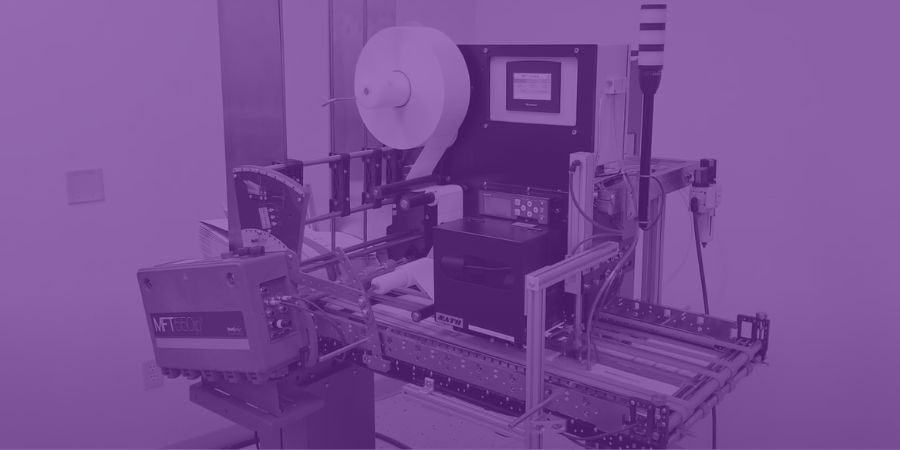
When Print and Apply Changes the Labeling Process
Traditional pre-printed labels work well when information remains consistent and production requirements are predictable. Manufacturers can order the labels they need, maintain inventory, and apply them as products move through production.
Variation changes that system.
When you’re running one product for several different customers, each has unique identifying information:
- lot numbers
- destinations
- barcodes
- RFID tags
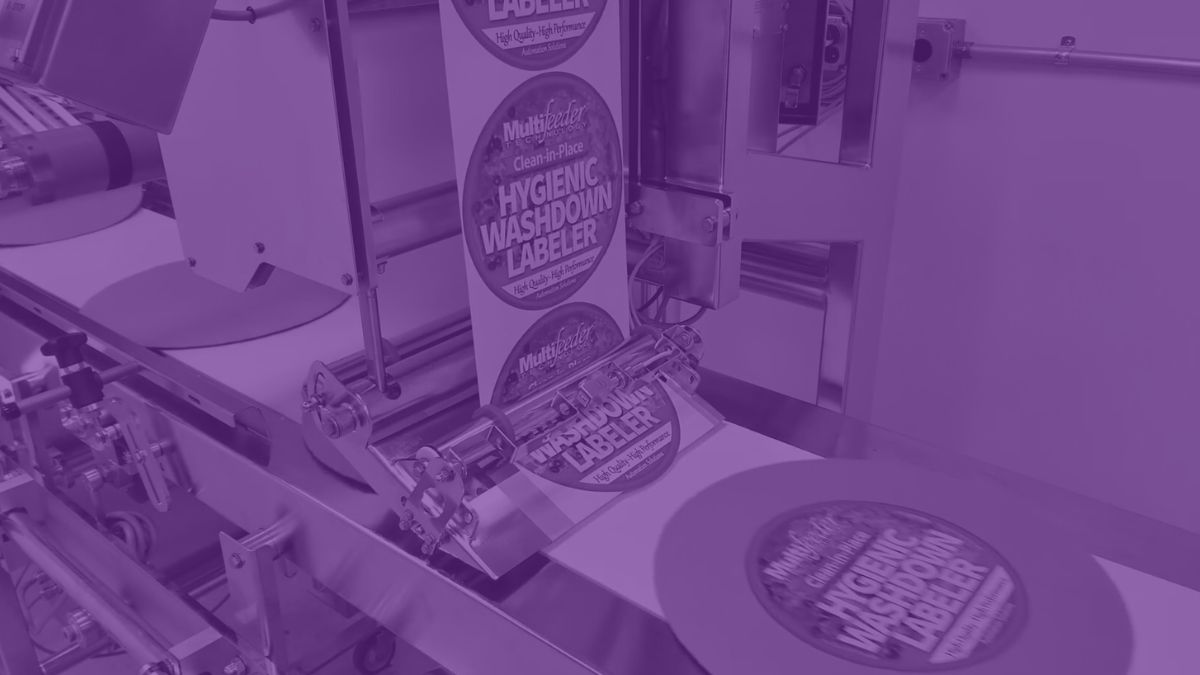
Maintaining pre-printed labels for every version creates another high-maintenance system. A print and apply label applicator makes variable identification part of the production process.
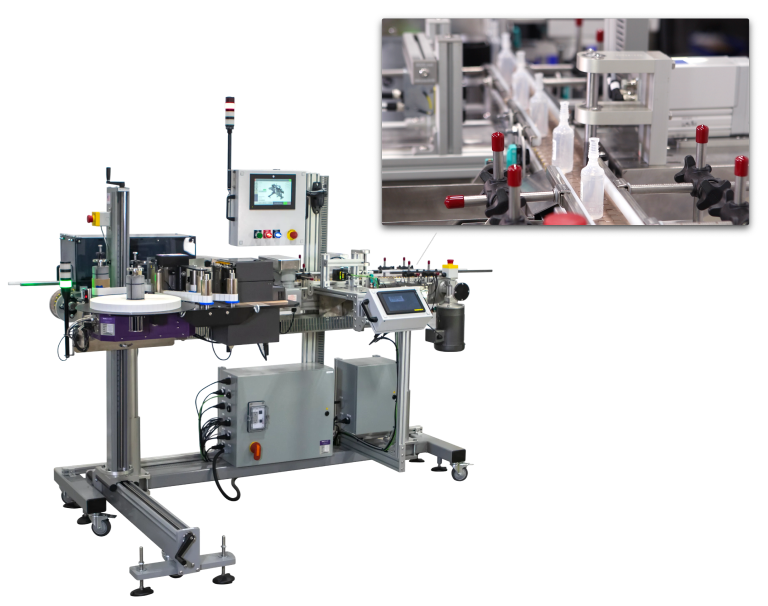
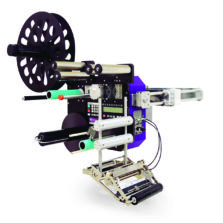
Instead of relying on information printed in advance, the system creates the label immediately before applying it to the corresponding product. This reduces operator functions and cuts inventory management for lines managing frequent changes, it can fundamentally change your labeling workflow.
Variable Data Connects Labeling to the Production Process
Once the information can change with each product, handling variability becomes a point of expertise, rather than a liability.
Barcodes identify items, lot or batch numbers support traceability, shipping information determines where a finished product goes next. In regulated industries, the label can also carry compliance and verification information.
Each case creates the same basic requirement: the physical product and the information assigned to it must remain synchronized.
The system needs to know which product is present, what information belongs to it, and whether the correct action took place. Depending on the application, that process can involve:
- sensors
- databases
- printing systems
- labeling equipment
- vision technology
- track & Trace software
The automatic label machine is a central function of the connected information workflow.
Accuracy Is Not Finished When the Label Is Applied
Successful label application answers one question: Did the label reach the product?
Modern production environments often need to answer several more:
- Is it in the correct position?
- Is the barcode readable?
- Does the printed information match the product?
- Is anything missing?
- Can the product continue downstream or should it be rejected?
Verification systems close the gap between performing operations and validating them.
- Vision systems can inspect label presence and placement.
- Barcode verification confirms that codes are readable.
- Advanced inspections compare variable information against your database.
In addition, an integrated reject process can remove the affected products when a problem is detected.
Discovering a label error after products have been collated, packed, palletized, and shipped creates a massive problem. Whereas one incorrect label identified immediately after application creates a contained production issue that can be quickly corrected.
Good labeling automation gives manufacturers more accountability, visibility, and control.
The Handoffs Between Machines Determine System Performance
It is possible to assemble an automated process from excellent individual machines and still end up with an unreliable workflow.
If a perfectly functional feeder releases products at a rate the next machine cannot handle, misaligned labels will throw off registration, verification, rejection, and subsequent handling processes.
These aren’t machine problems, and replacing your components won’t solve them.
Effective system design considers handoffs from the very beginning. Integrated systems are engineered around the complete process including:
- product spacing
- registration
- operating speeds
- sensor locations
- communication
- inspection points
- reject logic
The result is a complete system: connected, coordinated, communicative.
Connecting Physical Products to Digital Information
As product identification becomes more data-driven, integration has another dimension.
As the physical product is moving through feeders, conveyors, tabbers, and labeling equipment, the information associated with it is moving through software systems.
Those two journeys need to remain connected.
This becomes especially important in applications involving Track & Trace, serialization, variable data, or customer-specific identification.
A perfectly applied label carrying the wrong information is useless. Likewise, accurate digital records without reliable physical identification creates more confusion than it resolves.
Verification and vision systems help create checkpoints between these physical and digital processes. They allow the system to confirm that the expected information exists on the expected product before production continues.
Product Identification Continues Into End-of-Line Packaging
For many packaging operations, identification requirements continue through the final stages before distribution.
An individual product may leave the packaging line correctly identified but still require case labels, shipping information, and logistics data farther downstream. Print and apply technology supports these end-of-line packaging applications by generating information as cases, cartons, or other packaged products move toward warehousing and shipment.
This is another reason product identification functions better as a workflow rather than a single labeling event.
Information applied earlier in production supports the individual product, but information added later may identify a case, shipment, destination, or logistics unit. The specific requirements change, but the need for accurate coordination remains.
When those operations share data and are designed as part of a larger automation strategy, manufacturers gain better continuity between production and distribution.
Designing Automation for the Next Product
It’s impossible to know every requirement your system will face five years from now. And designing for current applications can make future changes harder than necessary.
MFT Automation’s modular approach builds in room for the system to evolve. Rather than installing every possible technology from the beginning, we establish a strong automation foundation so that capabilities can be easily added as production requirements justify them.
A print finishing application can begin with feeding and tabbing, and add on labeling and inspection down the road. An end-of-line packaging system can incorporate print and apply labeling today, then require additional verification or data integration later.
The important consideration is whether your original system is designed with those possibilities in mind.
Modularity supports expansion by giving manufacturers options.
Look Beyond Rated Speed When Evaluating Product Identification Automation
Machine speed is easy to compare because it gives decision-makers a clear number. Actual production performance is more complicated.
A faster machine does not automatically create a more productive process if frequent changeovers, inconsistent handling, identification errors, or troubleshooting consume the time gained during production.
For operations managing variation, other questions become just as important.
- How easily can the system transition between products?
- Can variable information change without creating unnecessary setup work?
- What happens when an incorrect or unreadable label is detected?
- Can inspection capabilities be expanded later?
- How much coordination is required from operators to keep separate pieces of equipment working together?
Another question that is easy to overlook during equipment selection is: who is responsible for the performance of the complete process?
Individual machines from different suppliers can provide capable equipment, but when challenges arise in the handoffs between those machines, you need a partner who understands the entire workflow.
Industrial Automation Solutions Should Reflect the Complete Workflow
At MFT Automation, system design starts with the application and past production challenges.
For one application, the right solution may involve a friction feeder, tabbing system, and conveyor. Another may require a print and apply label applicator, vision inspection, and rejection. More complex systems can bring those operations together with Track & Trace or other data-driven processes.
That is why collaboration matters early in our process. Your team understands the products, variations, exceptions, and production realities that have accumulated through years of operating the process. We bring the engineering perspective needed to translate that knowledge into a coordinated system.
Strong automation partners will work to bring those two expertises together.
Building Product Identification Around the Complete Process
Modern product identification extends well beyond the moment a label is applied.
Across print finishing, packaging, and end-of-line operations, automation establishes identifying information, controls how products are handled, verifies critical operations, and prepares products for what comes next.
As production becomes more variable, those responsibilities become increasingly connected.
Tabbing machines, label applicators, and vision systems can each perform important individual tasks, but long-term performance depends on what happens across the complete workflow.
That is why MFT Automation approaches product identification as a systems challenge. By considering your complete production process, we can engineer systems that give you greater control over your operation that perform reliably today and leave room for tomorrow’s products and processes.
Talk with our engineering team about your latest product identification challenge.