The first packaging line you install is rarely the same one you’re running three years later.
As your business enters new markets, takes on new products, expands packaging sizes, and adjusts for evolving consumer preferences, your packaging infrastructure must be able to adapt.
What makes cannabis packaging unique is how often changes happen, and how many of them happen simultaneously.
It’s easy to think of compliance as the primary challenge for cannabis manufacturers, and regulations certainly play an important role, but they are only one source of operational complexity. Growth, product diversification, new distribution channels, and customer expectations all drive constant change within the industry.
Packaging sits at the center of all of it.
Every change eventually reaches the production floor, where operators are responsible for keeping products moving accurately, efficiently, and consistently.
That is why strong automation strategies start with today’s requirements, but long-term success comes from building packaging systems that remain flexible as your business evolves.
Consistency Amid Constant Change.
Manufacturers in every regulated industry deal with compliance. With cannabis the challenge is the pace of change.
A company may launch several new products in a single year, all while existing products receive packaging updates and retail partners are requesting new configurations. Meanwhile, new markets open up and others introduce new labeling requirements. Federal and state regulations evolve. Consumer demand shifts toward new formats.
None of these changes happen in isolation. They stack on top of one another.
Eventually, your packaging line is supporting dozens of products across multiple formats, each with its own labeling requirements, production schedule, and inventory considerations.
The difficulty is complexity.
Operators are managing more:
- Decisions
- Products
- Labels
- Changeovers
- Documentation
There are hundreds of new opportunities for something to be missed.
While automation does not eliminate these variables, good automation creates a process for managing them consistently. And that influences how we approach system design.
Growth Doesn’t Break Packaging Lines. Rigid Systems Do.
The early signs of growth can be easy to miss.
- Production schedules become more complicated.
- More products are competing for time on the same line.
- Operators spend more time verifying labels before a run starts.
- Packaging materials take up more warehouse space.
- Changeovers become more frequent.
The first indicator of growth is often that the packaging process feels harder to manage.
Even though these growing pains don’t typically feel like a win, they are often a sign that your business is succeeding.
The problem is that many packaging lines are built around the assumption that tomorrow will look much like today. Cannabis manufacturing doesn’t work that way – success changes the operation.
While the packaging equipment is still capable of running every product, a rigid system forces you to work around the equipment. A flexible system absorbs those changes with less disruption.
This is why flexibility matters more than raw throughput.
Flexibility supports far more than productivity. It influences downtime, operator workload, training requirements, scheduling, and ultimately your operation’s ability to continue growing without constantly rebuilding your packaging line.
Every Business Decision Eventually Reaches the Packaging Line
Most changes to a cannabis packaging operation don’t begin on the production floor.
They begin when:
- A product manager approves a new SKU.
- Sales expands into another market.
- Marketing redesigns a package.
- A state updates its labeling requirements.
- A retailer asks for a different package configuration.
Each decision makes sense on its own, but the fact is, every one of them eventually lands in the same place: The packaging line.
That’s where your business decisions become operational decisions.
These changes are inevitable in the cannabis industry; it only makes sense that we should design packaging operations to absorb them while maintaining production speed, minimizing errors, and streamlining operations.
In the midst of all these interconnected components, there’s one that sits at the intersection of almost every decision.
The Label Is Where Complexity Becomes Visible
Labels carry product information, warning statements, batch details, expiration dates, traceability data, and market-specific requirements. As your product line grows, the label becomes the place where compliance, product, and brand decisions meet.
That makes labeling more than a final application step. It is a control point.
It’s simple to print a new label file. It is harder to ensure the correct version reaches the correct product throughout the entire run. When dozens of SKUs with their own package formats and market requirements share the same line, a simple selection error can do a lot of damage.
The burden should not fall on an operator remembering every variation.
A strong labeling process limits the number of manual decisions you have to make before production begins. Product data, label selection, and verification work together so the line confirms what should be running instead of someone catching an error after it happens.
This is where the value of an integrated system becomes clear.
The labeler applies the information, but upstream and downstream technologies help to ensure that the information is correct. Product handling keeps packages controlled. Vision inspection checks placement and print quality. Verification confirms that the label matches the product and production order.
The individual technologies matter. Their coordination matters more.
When those functions operate as one workflow, labeling becomes easier to manage even as the number of products and label versions continues to grow.
Traceability Connects What Happens Across the Line
Traceability is often a regulatory requirement, but on the production floor, it serves a broader purpose: It gives your team confidence in what happened.
When a quality question arises, you need more than a package identifier. You need to know;
- which product ran
- which batch it came from
- which label was applied
- when it moved through production
- whether it passed inspection
That information already exists in most packaging operations. The problem is that it frequently lives in different places.
One record sits in production software. Another is printed on a traveler. Label data is stored somewhere else. Inspection results stay inside a separate machine. When those systems do not communicate, answering a basic question becomes an in-depth investigation.
Track and Trace brings these pieces together.
As products move through the line, packaging data becomes part of a connected production record. That gives quality, operations, and compliance teams a clearer view of product movement without forcing them to reconstruct the process after the fact.
The value here is clearest when something goes wrong.
- A questionable shipment no longer requires hours of searching through paperwork.
- A lot investigation begins with connected records.
- Inventory discrepancies are easier to isolate.
- Product holds become more precise because the team knows exactly which units are affected.
Traceability is not a new layer of work piled on your team. When integrated correctly, it simply removes uncertainty from the work they’re already doing.
Automation Should Organize Complexity, Not Add to It
As packaging needs expand, many manufacturers respond by simply adding equipment one problem at a time.
- A labeler addresses one requirement.
- A scanner handles another.
- An inspection station is added later.
- Reporting software enters the process when compliance needs change.
Each purchase solves an immediate issue, but the line gradually becomes harder to manage.
Operators move information from one system to another. Engineering teams maintain equipment with separate controls and different interfaces. A routine product change requires adjustments across several disconnected stations.
The line has more automation, but the process is not more unified.
This is the difference between installing machines and building an integrated packaging system.
A systems-minded approach begins with the workflow.
- How does the product enter the line?
- Where is it identified?
- When is variable information added?
- How is that information verified?
- What happens when a package fails inspection?
- Where is production data stored?
Those questions shape the equipment selection, but they also reveal where integration will have the greatest impact.
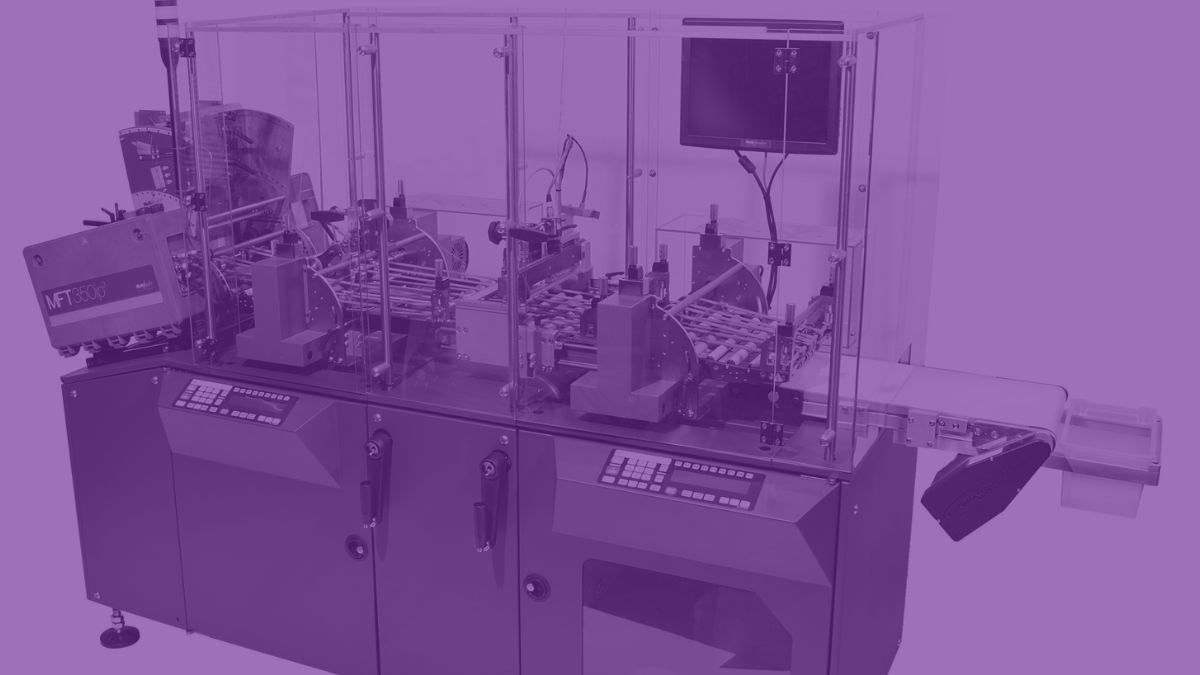
Your cannabis packaging machine should not operate as an isolated asset. It should support a connected process in which product handling, labeling, inspection, verification, and Track and Trace reinforce one another.
That coordination reduces manual handoffs and gives operators a clearer process to follow. It also makes future changes easier because the operation has a defined structure instead of a collection of workarounds.
Modularity Makes Change Easier to Absorb
You cannot predict every product, market, or regulation your business will face in the next five years. You can design a system that does not need to be rebuilt every time something changes.
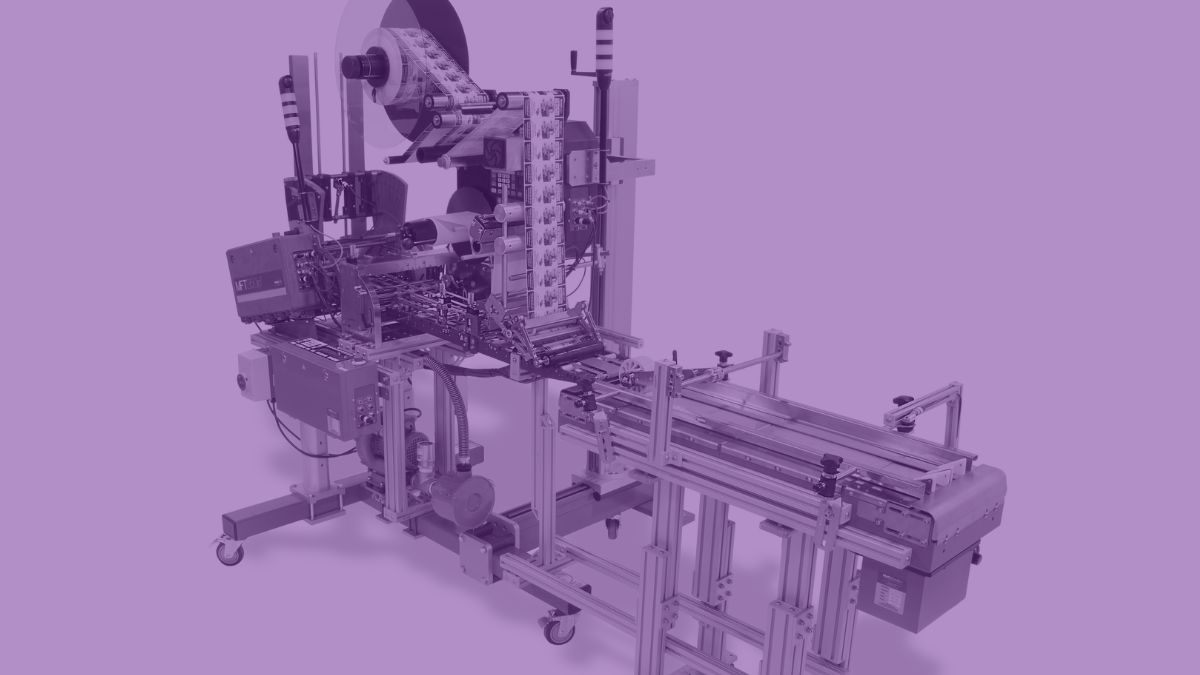
A modular system gives you a stable foundation with room to add new capabilities as the operation evolves. A labeling process can expand to include vision inspection. A verification step can connect to Track and Trace. Product handling can be adjusted for a new container or package format without replacing the entire line.
The goal is not to purchase every possible technology up front.
For some operations, a straightforward cannabis packaging machine is enough for current production needs. Adding unnecessary complexity increases cost without delivering meaningful return.
The stronger strategy is to understand what the business needs now and engineer a clear path for what will come next. That requires honest assessment and planning.
- Which products are likely to expand?
- Which markets are part of the growth plan?
- Where are manual checks already creating delays?
- Which parts of the process will become difficult when volume or SKU count increases?
Those conversations will help determine where flexibility belongs in your system from the start.
Modularity protects the initial investment because future improvements build on the existing line. Instead of treating every new requirement as a replacement project, your team can add, adjust, or reconfigure the system around the next stage of the business.
Change becomes planned progress, not a production crisis.
What to Look for in a Cannabis Packaging Machine
Speed and throughput deserve attention, but they should not lead the entire decision.
A fast machine’s value will be limited if every new product requires extensive setup, complicated changeovers, or manual checks throughout the run.
It’s better to start by looking at the operation you are building towards.
Start with the products and formats you run today, then look beyond them. Consider how easily equipment adjusts for different package sizes, label placements, and product characteristics. Review how operators select recipes, confirm setups, and recover from faults. Evaluate whether inspection, verification, or Track and Trace can be integrated without redesigning the line.
Service access matters too. A system designed for growth still needs to be practical to operate and maintain. Components should be accessible, controls should be clear, change parts and adjustments should not turn every setup into a specialized maintenance task.
Lastly, consider the automation partner behind the equipment. A supplier can install a machine that meets a specification. A systems integration partner will look at how that machine fits the complete workflow, how it will connect with existing technologies, and how the line will evolve as your operation changes.
That broader view is especially important in cannabis packaging, where today’s production requirement rarely remains fixed for long.
Building Cannabis Packaging Automation for What Comes Next
Cannabis packaging lines can handle a single regulation change easily, but when product growth, consumer demand, traceability, market expansion, and regulations all place new demands on the same operation, things get more difficult.
The answer is not more equipment. It is a packaging strategy built to absorb change.
That strategy connects labeling, product handling, inspection, verification, and Track and Trace into one coordinated process. It uses modularity to support expansion without forcing the operation to start over. Most importantly, it gives your team a consistent way to manage new requirements without losing control of production.
At MFT Automation, we design packaging automation solutions around the complete workflow. We work with manufacturers to understand what the line needs to accomplish today, where pressure is likely to build, and how the system can remain useful as the business grows.